Why do we travel? To break from routine? To encounter the unfamiliar? Or perhaps to find something familiar in a different setting? To see again with eyes that have changed since the last time? To briefly lose yourself somewhere else? I’ve never settled on one answer, and each trip seems to offer a different one.
We spent the last two weeks of May in Paris, returning for the first time in seven years. Maybe it was the unusually warm weather, with its blue skies and long stretches of sunshine, but the city seemed cleaner and more polished than I remembered. The days quickly filled with conversations with old friends, visits to museums and galleries, long walks, and good food.
The images that follow offer a glimpse of some of the exhibitions we visited. They are a personal record of works, ideas, and encounters.
Only after returning home did I begin to see a thread running through many of the exhibitions. The artists differed in medium, generation, and temperament, yet there was a common sense of conviction in their work. Paula Rego, Lee Miller, Leonora Carrington, Hilma af Klint, Sophie Taeuber-Arp, and Mamma Andersson each created a world shaped by its own way of seeing. Moving between these exhibitions, I found myself thinking less about art history and more about persistence: the persistence of women finding ways to make work, tell stories, and remain faithful to their own vision. There was something hopeful in encountering so many singular voices across time, each insisting on the value of her own vision. Looking back, that may be what stayed with me most: the cumulative effect of encountering so many artists across generations, each insisting on the value of her own vision.
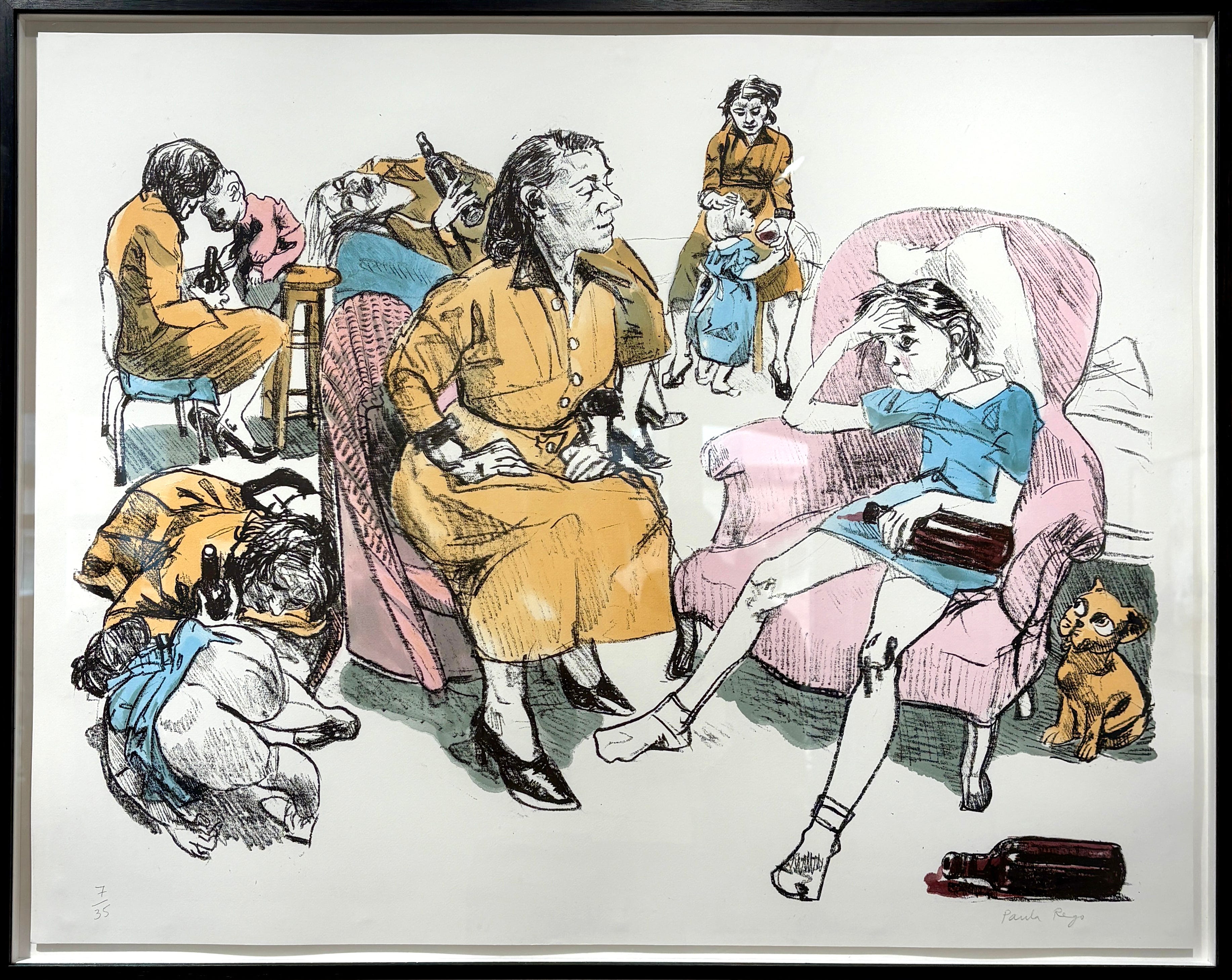
Paula Rego, Playtime, from Oh Vinho, 2007, Lithograph, Edition of 35, 88.7 x 60 cm Drawing from Life, Galerie Lelong. Fairy tales, and childhood memories become unsettling narratives in which power, vulnerability, and desire remain in constant tension. Rego can make a room full of seated figures feel very dramatic.
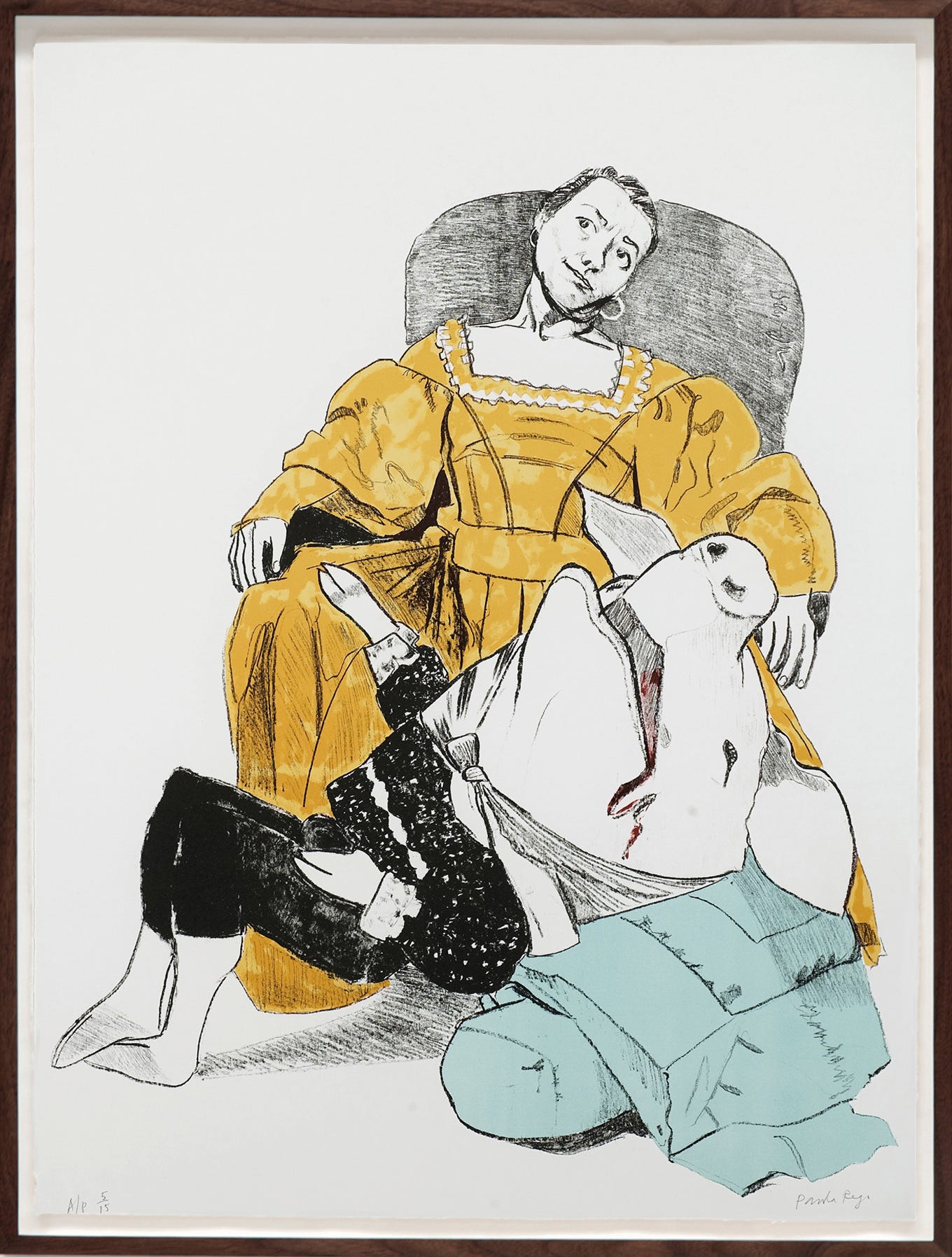
Paula Rego Unhappy Courtship, 2006, Lithograph, 87.5 x 64.5 cm. Drawing from Life, Galerie Lelong. Drawing on the sixteenth-century tale The Pig King, she transforms a familiar story into something both absurd and unsettling. Beneath the fairy tale lies a darker meditation on power, desire, and transformation.
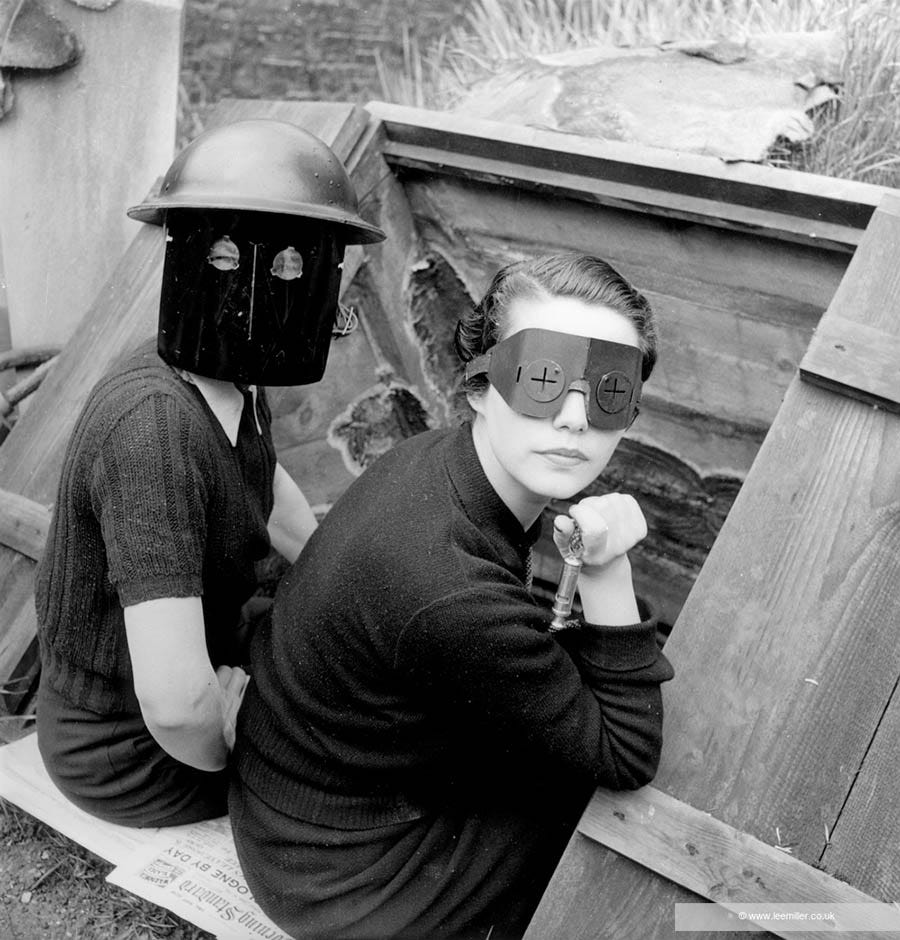
Lee Miller, Femmes équipées de masques anti-feu. Downshire Hill, London, 1941. Musée d’Art Moderne de Paris. Long overshadowed by her role as muse, Miller's work moved fluidly between surrealism, fashion photography, and wartime reportage. Here, fashion and war occupy the same frame, transforming everyday wartime objects into something strange and maybe even memorable.
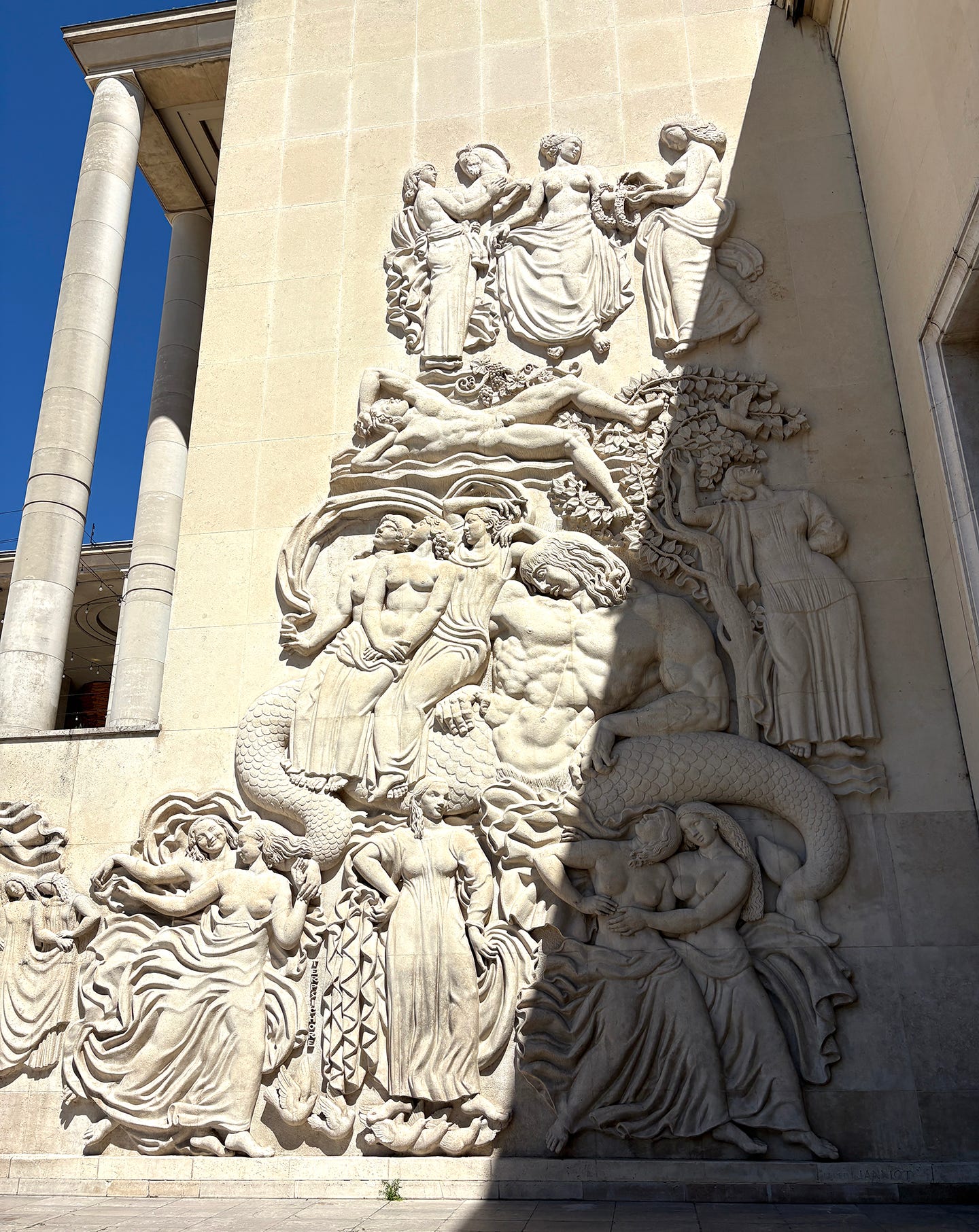
Alfred Janniot, Legend of the Earth and the Legend of the Sea, 1937. Musée d'Art Moderne de Paris. Created for the 1937 Exposition Internationale, this monumental relief is a celebration of humanity, land, and sea. I was delighted to discover the name Terpsichore (carved among its figures), the muse of dance so often invoked by Isadora Duncan, a lasting source of inspiration for me.
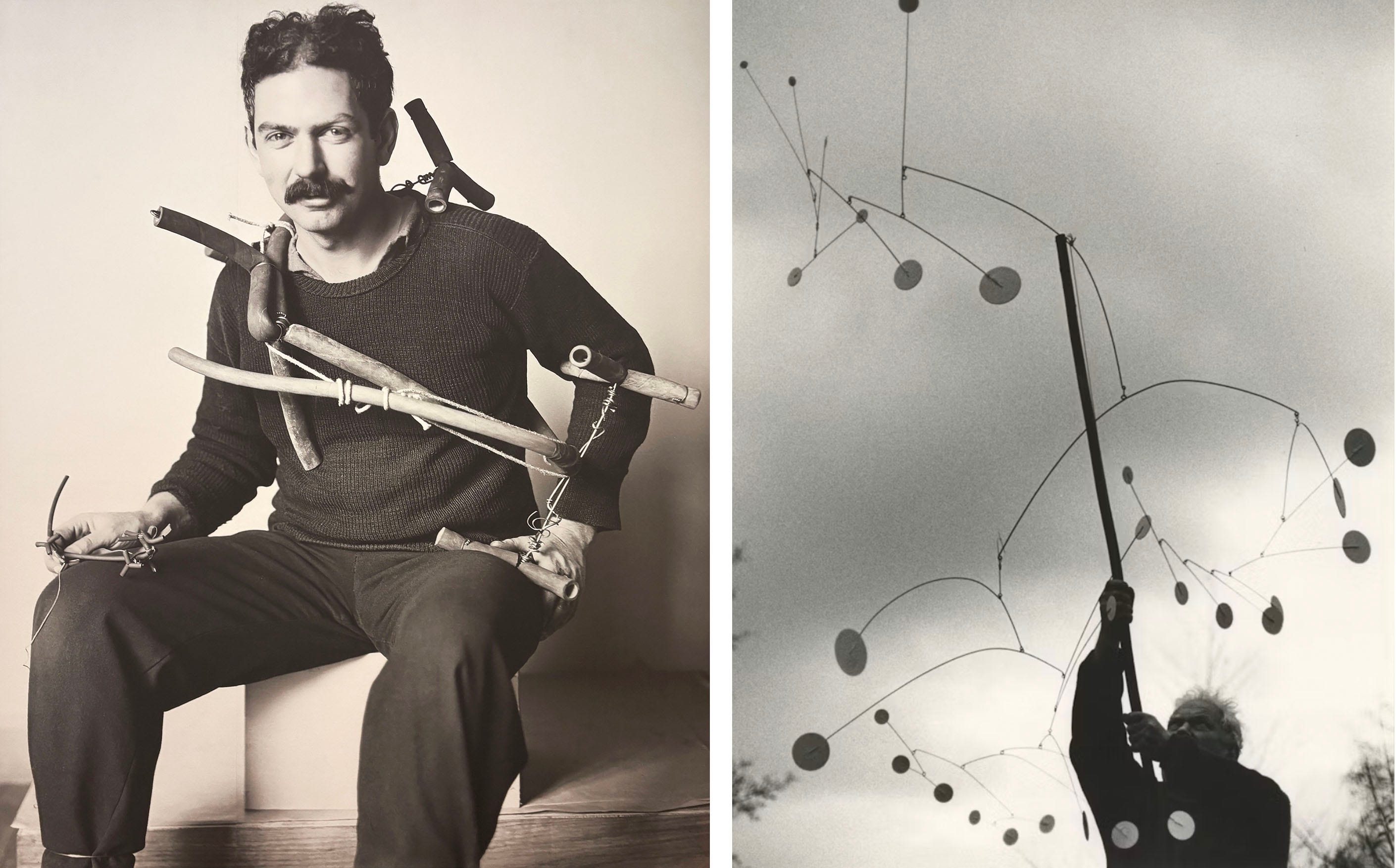
Alexander Calder, Rêver en Équilibre, Fondation Louis Vuitton. One of the most comprehensive Calder exhibitions I have seen, it brought together works from across his career. Photographs of Calder with Miss Tamara (1929) and Snow Flurry (1948) offered a glimpse of the artist behind sculptures that continue to dance through space.
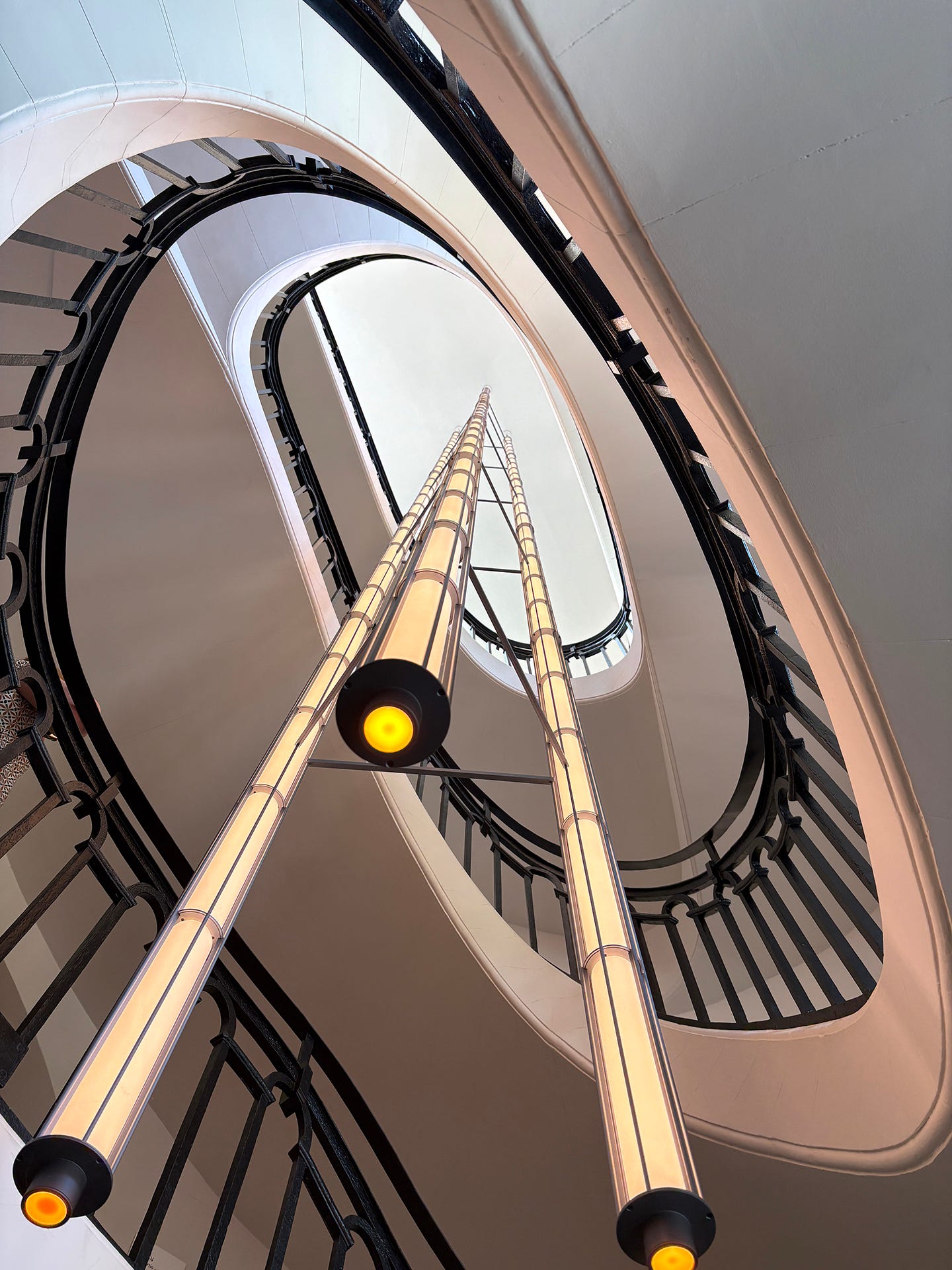
Bourse de Commerce – Pinault Collection.More than any artwork, I found myself drawn to the building itself. The double-helix staircase, illuminated by Ronan and Erwan Bouroullec, was a favorite. Designed so workers carrying grain could move in opposite directions without colliding, it is a beautiful reminder that utility and beauty need not be opposites.
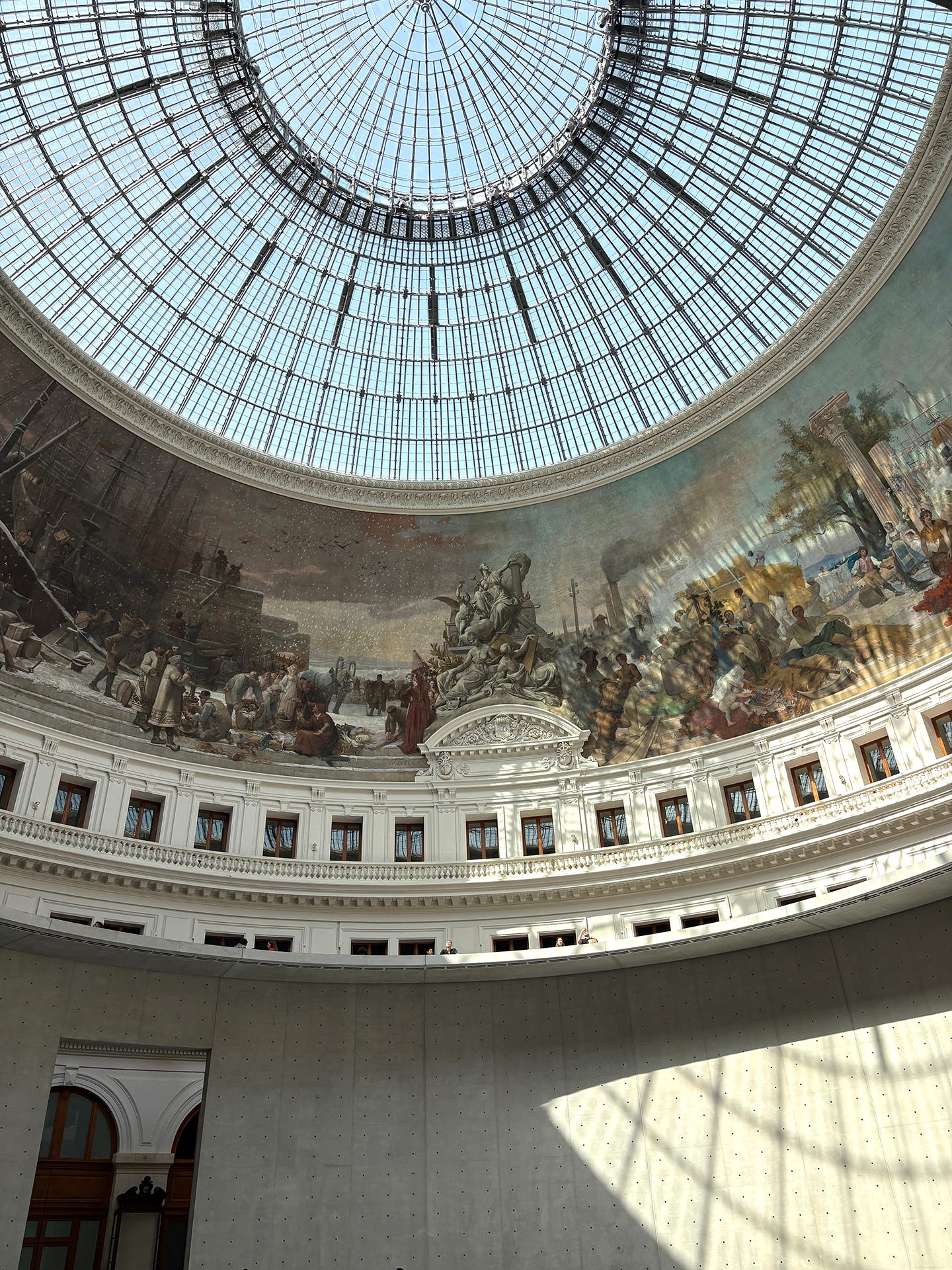
Bourse de Commerce , Pinault Collection. Beneath the nineteenth-century dome, Tadao Ando's concrete cylinder creates a striking dialogue between the building's past and present.
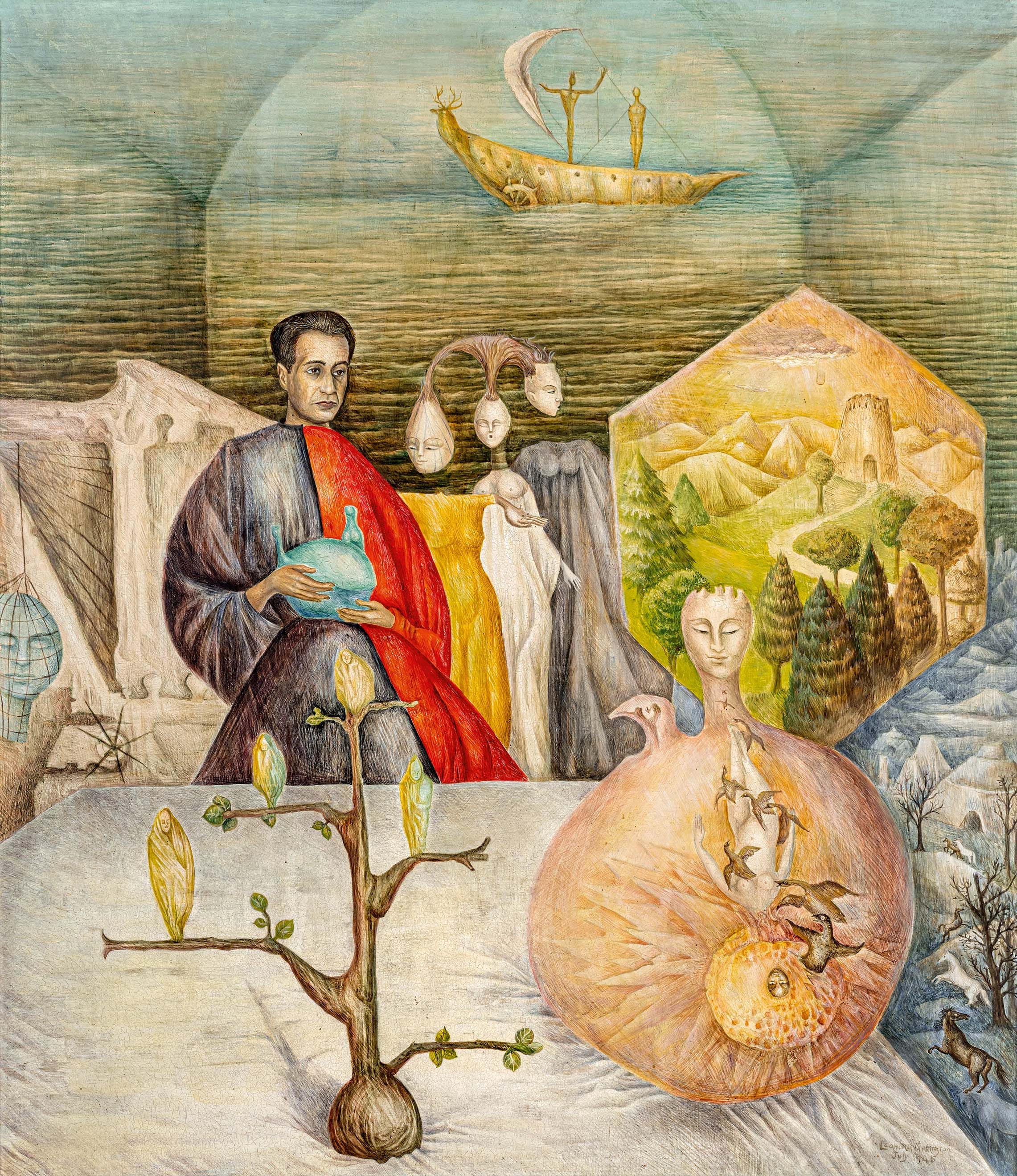
Leonora Carrington, Retrato del Dr. Urbano Barnés, 1946. Portrait of a Singular Artist, Musée du Luxembourg. Having studied Carrington, it was a pleasure to finally see so many of her works in person. What I admire most is her fierce independence. Her paintings unfold according to their own logic, shaped by symbolism, nature, transformation, and a profound belief in the power of imagination.
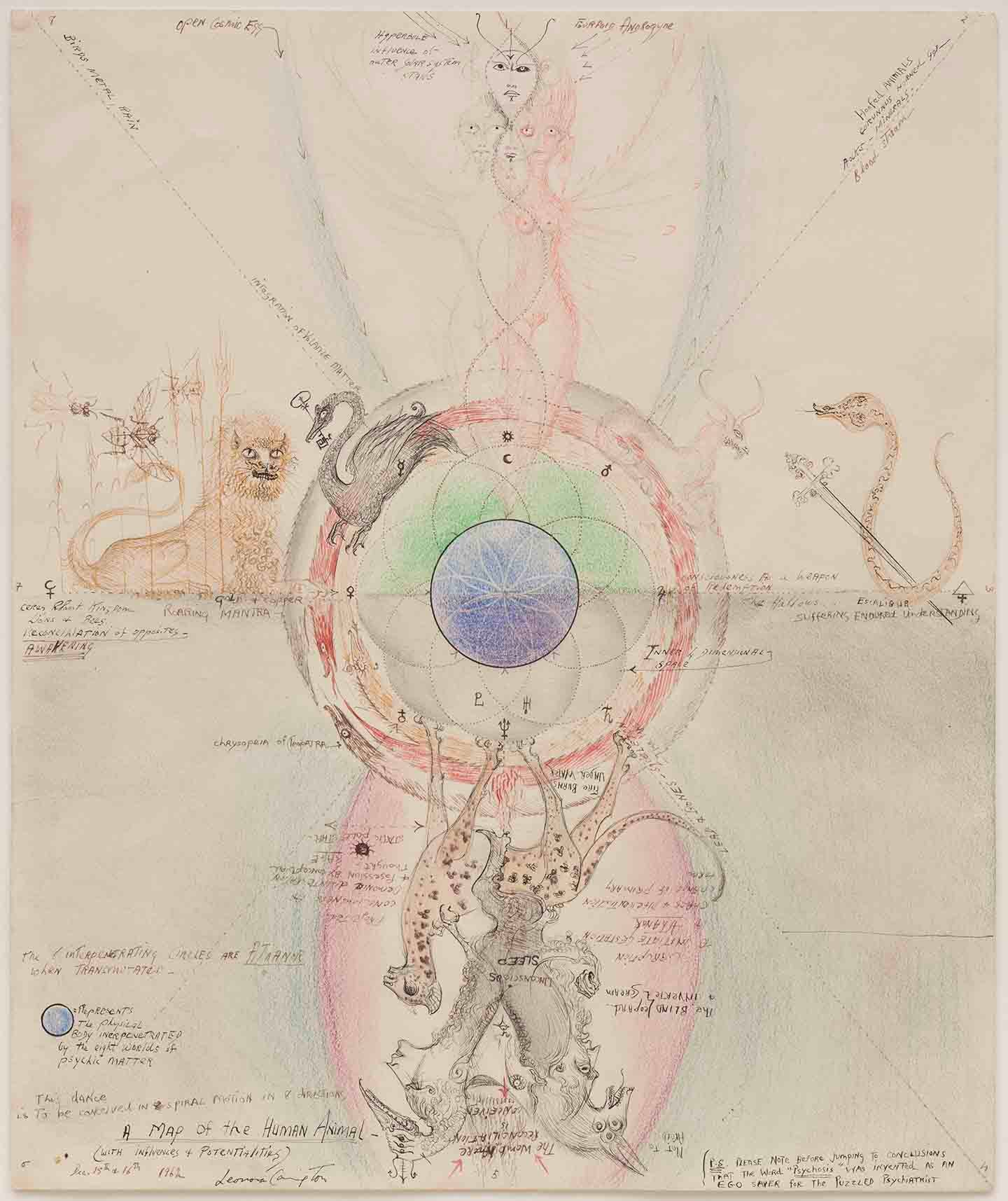
Leonora Carrington, A Map of the Human Animal, 1962. Portrait of a Singular Artist, Musée du Luxembourg. I was drawn to the way she brings together geometry, animals, plants, and human forms as parts of a single living system. The geometric forms seem to suggest an underlying order within a world that otherwise appears wonderfully mysterious.
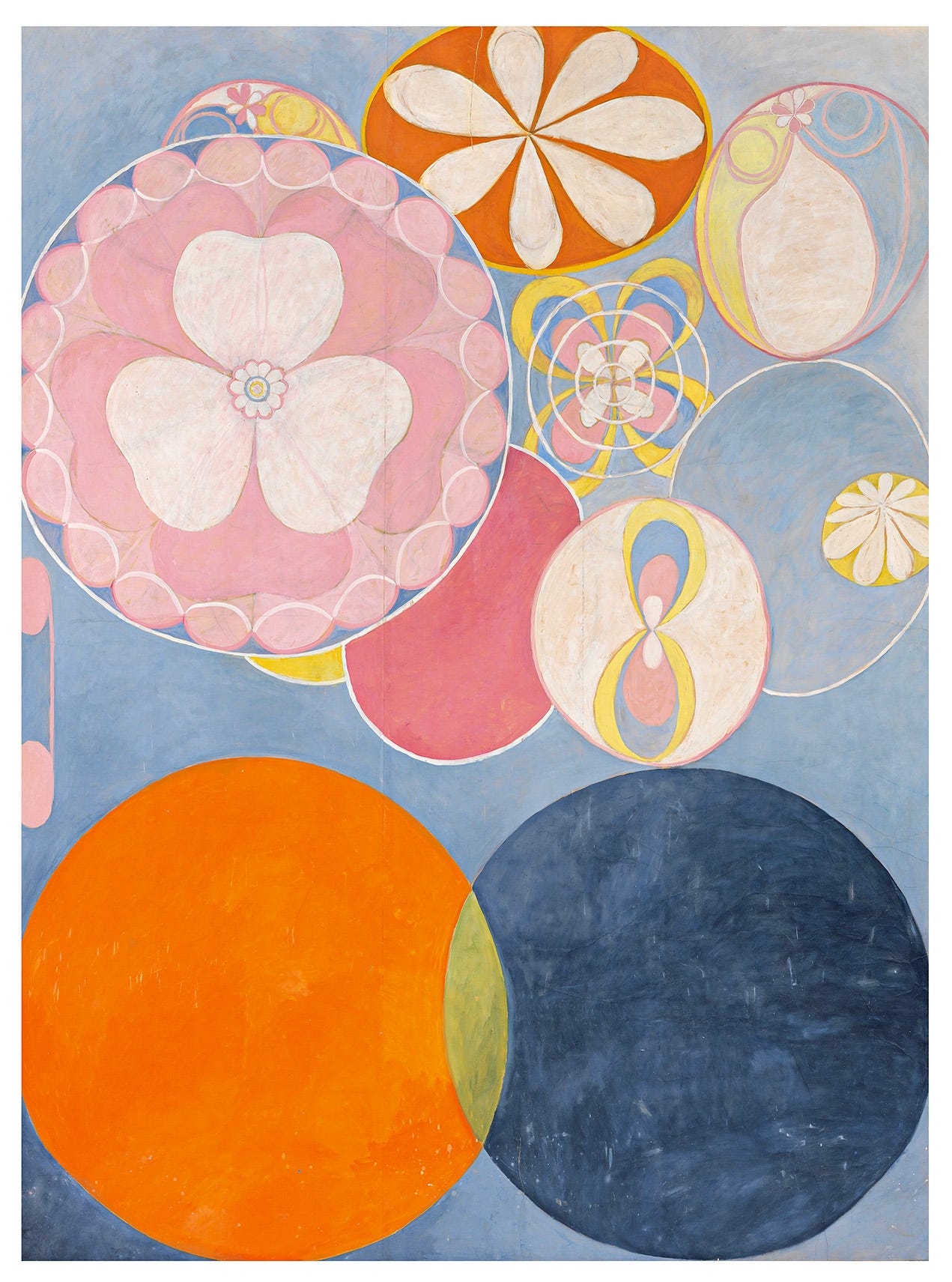
Hilma Af Klint, Les Dix Plus Grands, n2, 1907. Paintings for the Temple, Grand Palais. Seeing these monumental paintings in person was striking. Their scale, color, and symbolism create the feeling of entering a complete system of thought, one that seeks to give visible form to what cannot ordinarily be seen.
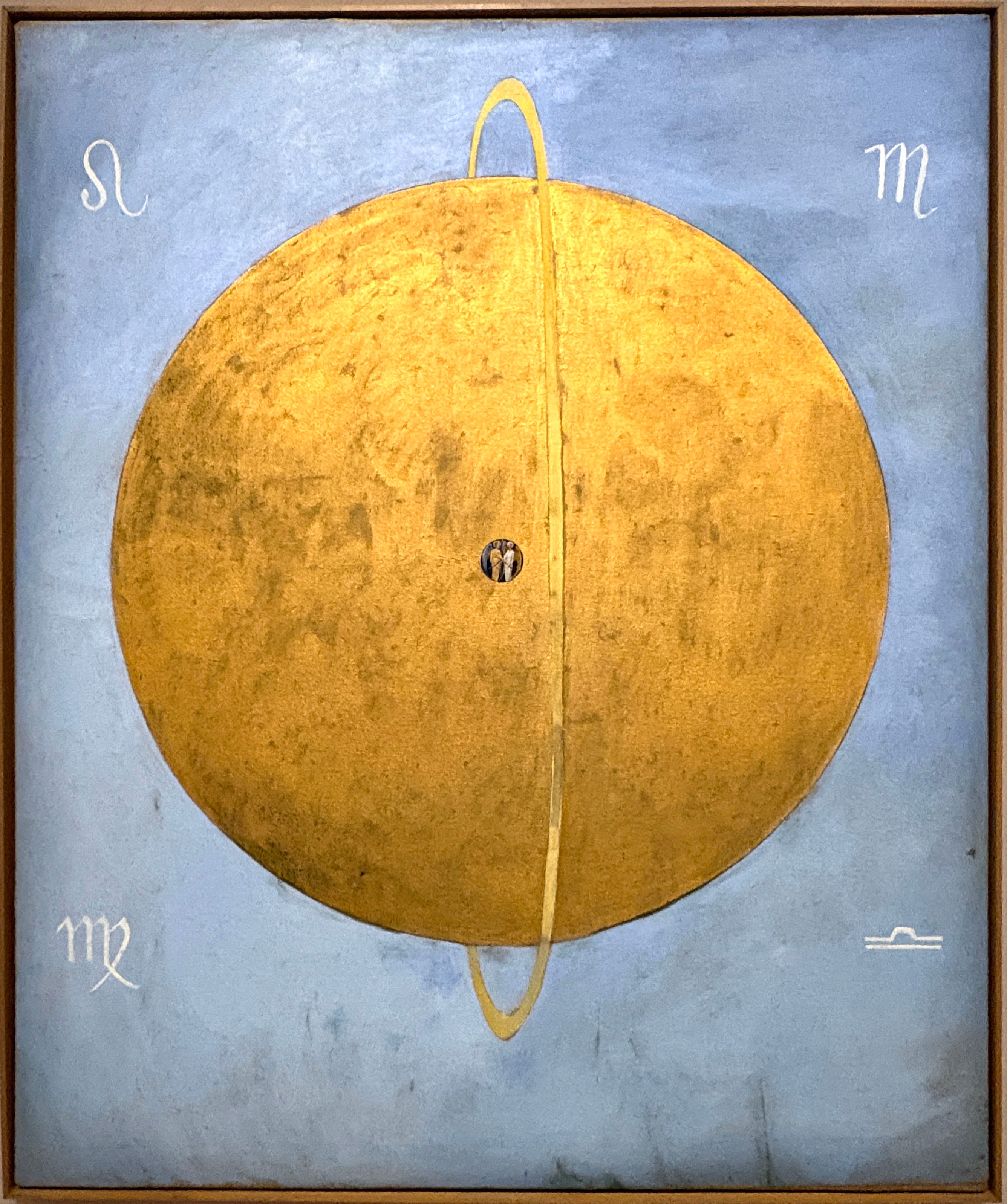
Hilma AF Klint, The Dove No 13 Group IX, 1915. Paintings for the Temple, Grand Palais. The vast golden sphere, delicate line, and tiny human figures suggest a cosmos in which the individual occupies only a small part of a much larger order.
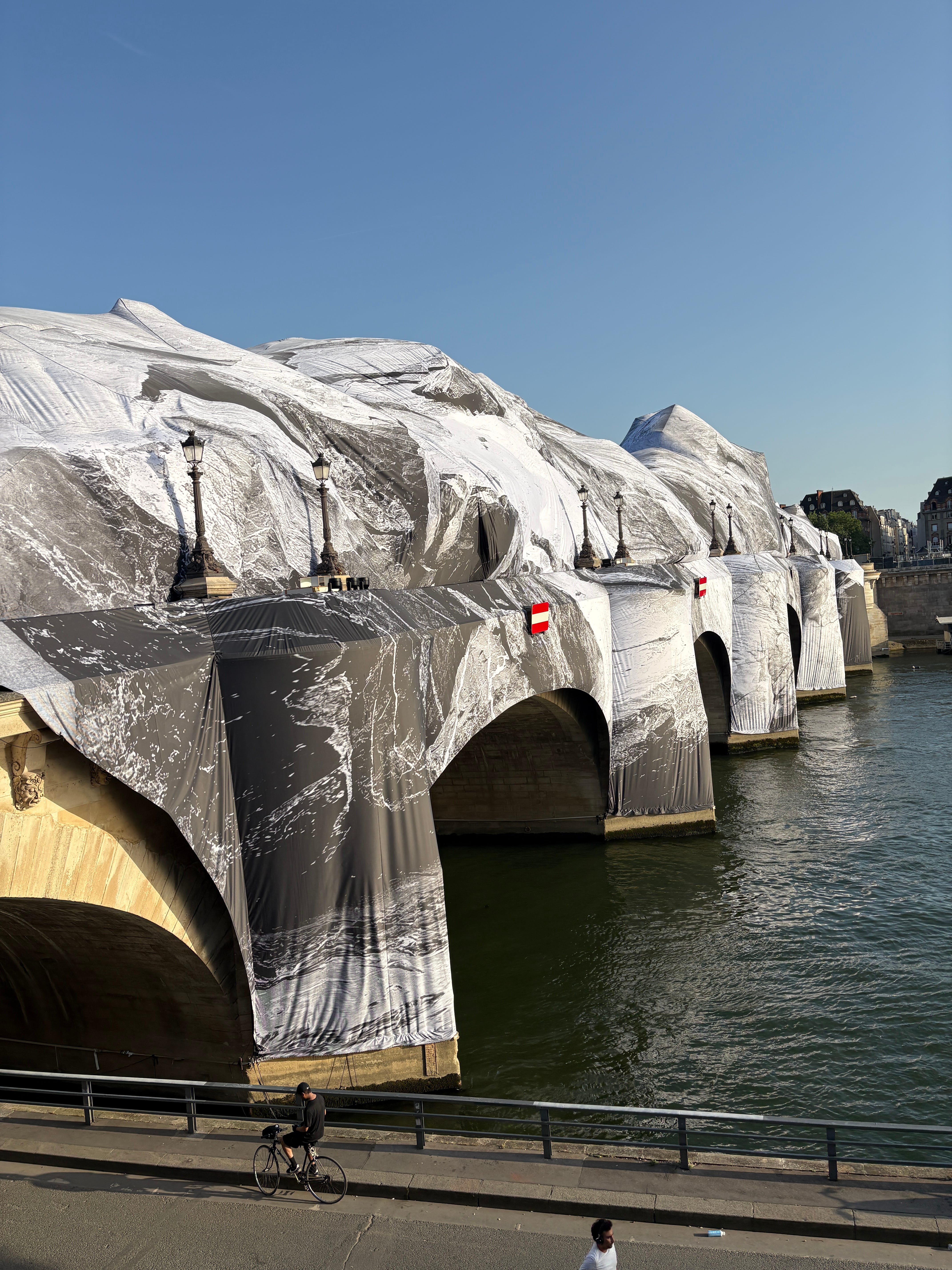
JR, La Caverne du Pont Neuf, 2026, inflatable fabric structure.Installed on Paris's oldest bridge, JR's temporary intervention transforms a familiar landmark into something strange and unexpected. Conceived as a tribute to Christo and Jeanne-Claude, it invites visitors to see a well-known place differently.
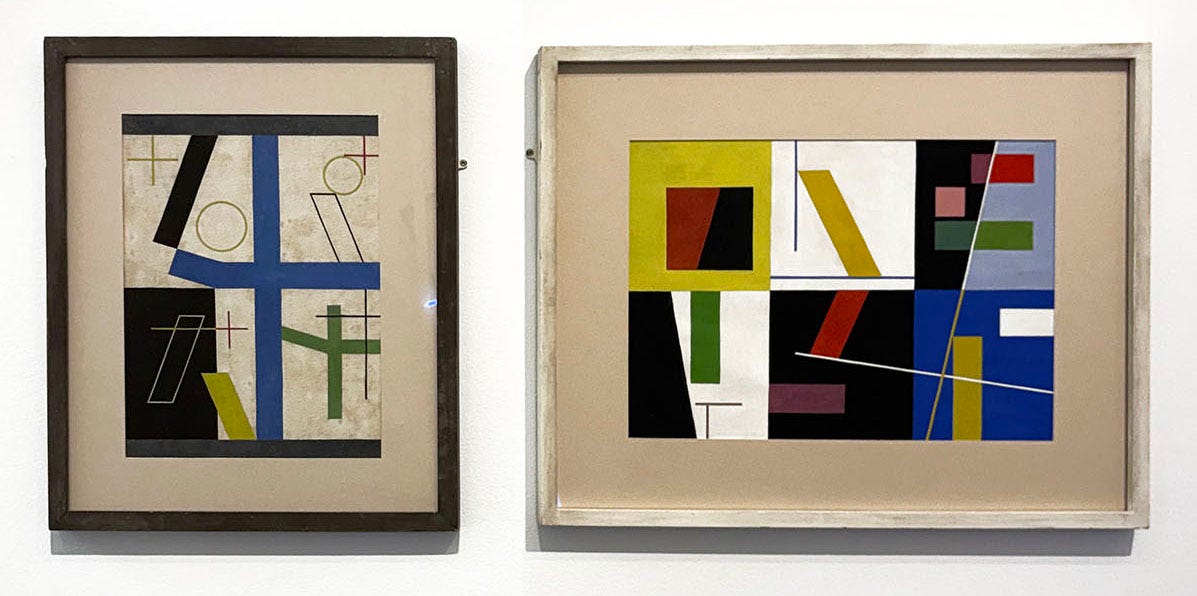
Sophie Taeuber-Arp, Quatre Espaces à Croix Brisée, 1932 (left) and Six Espaces Distincts, 1939 (right) both gouache on paper. Sophie Taeuber-Arp and François Morellet, Au Hasard, Mennour Galerie. I love her ability to bring playfulness and freedom into geometric abstraction. Her compositions feel carefully structured yet surprisingly light, as if order and spontaneity were working together rather than in opposition.
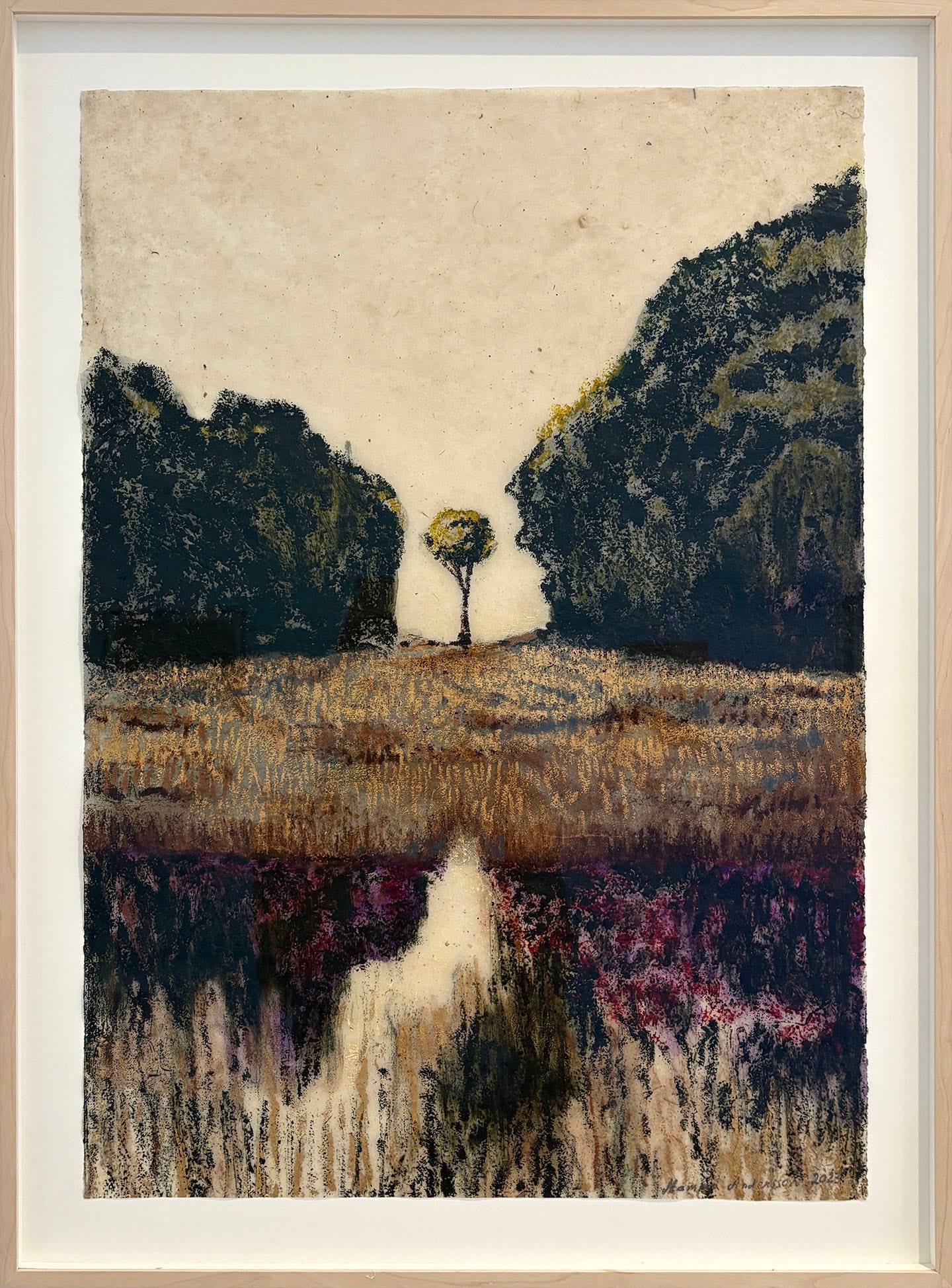
Mamma Andersson, Cauldron of Morning, 2023 oil on rice paper, 285 x 195 cm. Œuvres sur papier, David Zwirner. Her landscapes seem suspended between memory and dream. They possess what Norwegian writer Karl Ove Knausgård described as "a faint ring of something other", something familiar yet strangely distant.
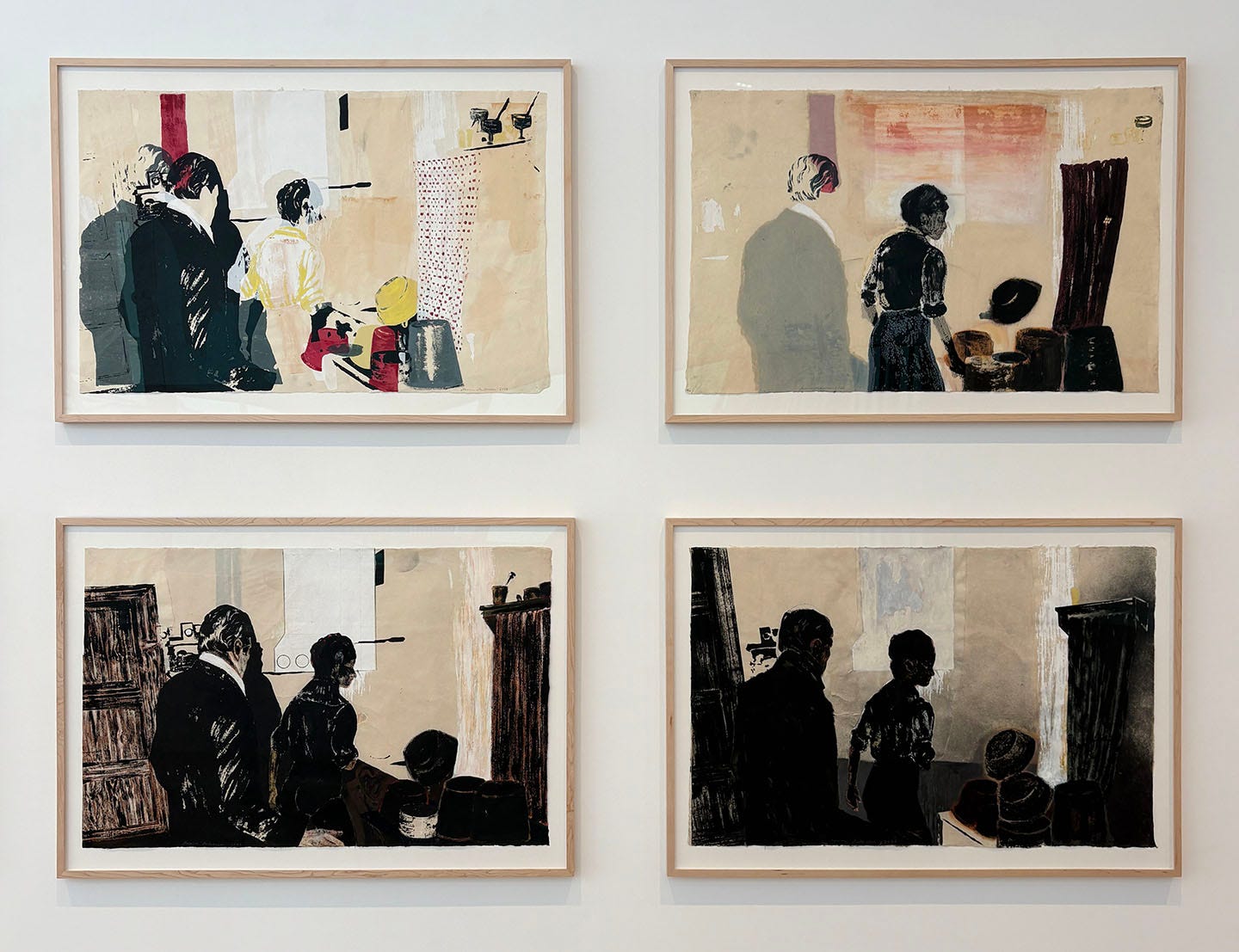
Mamma Andersson, Scenes from a Marriage, 2026, mixed media over screen print proof on rice paper, 63.9 x 99.4 cm each. Œuvres Sur Papier, David Zwirner. These scenes reveal very little, yet they leave room for endless speculation about what has just happened, or what might happen next.
Why do we travel? I still don't have one answer. I'd love to know what keeps sending you somewhere else.
Ahhh. I travel to see my friends whom, along the years, spread around the world like traveling seeds. Going to the places they are, sharing adventures and creating new memories together... It is my way of tending to our friendship, for it is beautiful and deserves care.
Thanks for this article! It’s a good question, I think that traveling for me was a revelation when I went to cuba for the first time at 12yo. I’ve seen people with nothing, just dancing, singing and enjoying life as much as they can with what they have. Traveling to me is discovering new cultures and let each trip show me a part of myself that I didn’t even know but also a part of the world and humanity


Ahhh. I travel to see my friends whom, along the years, spread around the world like traveling seeds. Going to the places they are, sharing adventures and creating new memories together... It is my way of tending to our friendship, for it is beautiful and deserves care.
Thanks for this article! It’s a good question, I think that traveling for me was a revelation when I went to cuba for the first time at 12yo. I’ve seen people with nothing, just dancing, singing and enjoying life as much as they can with what they have. Traveling to me is discovering new cultures and let each trip show me a part of myself that I didn’t even know but also a part of the world and humanity