

When a Gallery Starts Laughing
Claudia Bitrán and Bruno Munari on lightness, humor, and the weight of art.


There is a moment when the gallery fills with laughter.
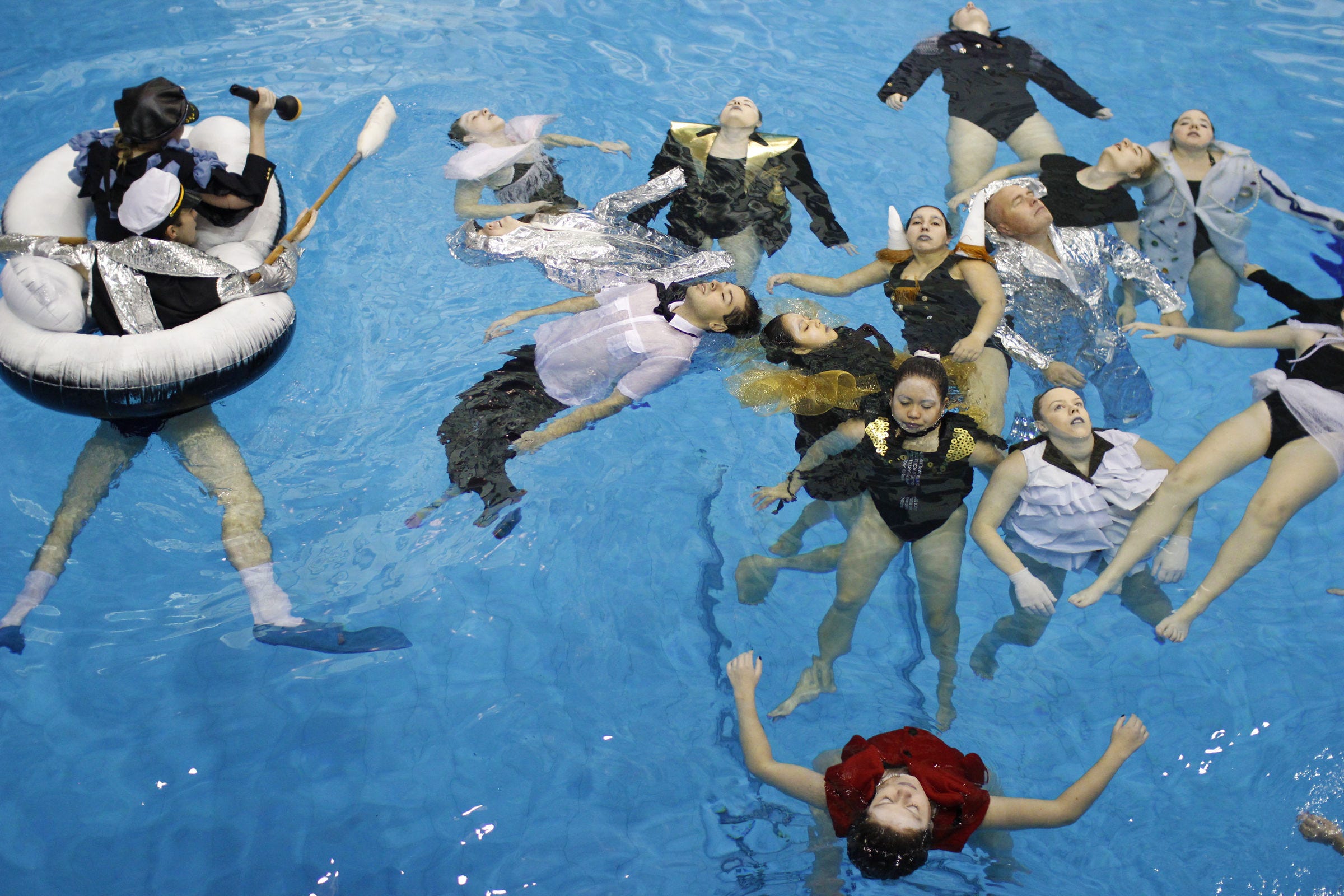
Not a polite laugh, not the kind that passes quickly and returns to composure, but something looser, collective, almost disobedient. It takes a second to register that this is happening inside a gallery, that the object of attention is Claudia Bitrán: Titanic, A Deep Emotion (Cristin Tierney Gallery), a solo exhibition centered on a three-channel video installation, nearly an hour and a half long, and surrounded by paintings, storyboards, and notes. In it, handmade sets, cardboard props, and improvised costumes restage the sinking of the Titanic with deliberate artifice. What unfolds is a reenactment of a story we already know too well. The ship, the fall, the bodies, the music, so familiar it no longer moves.
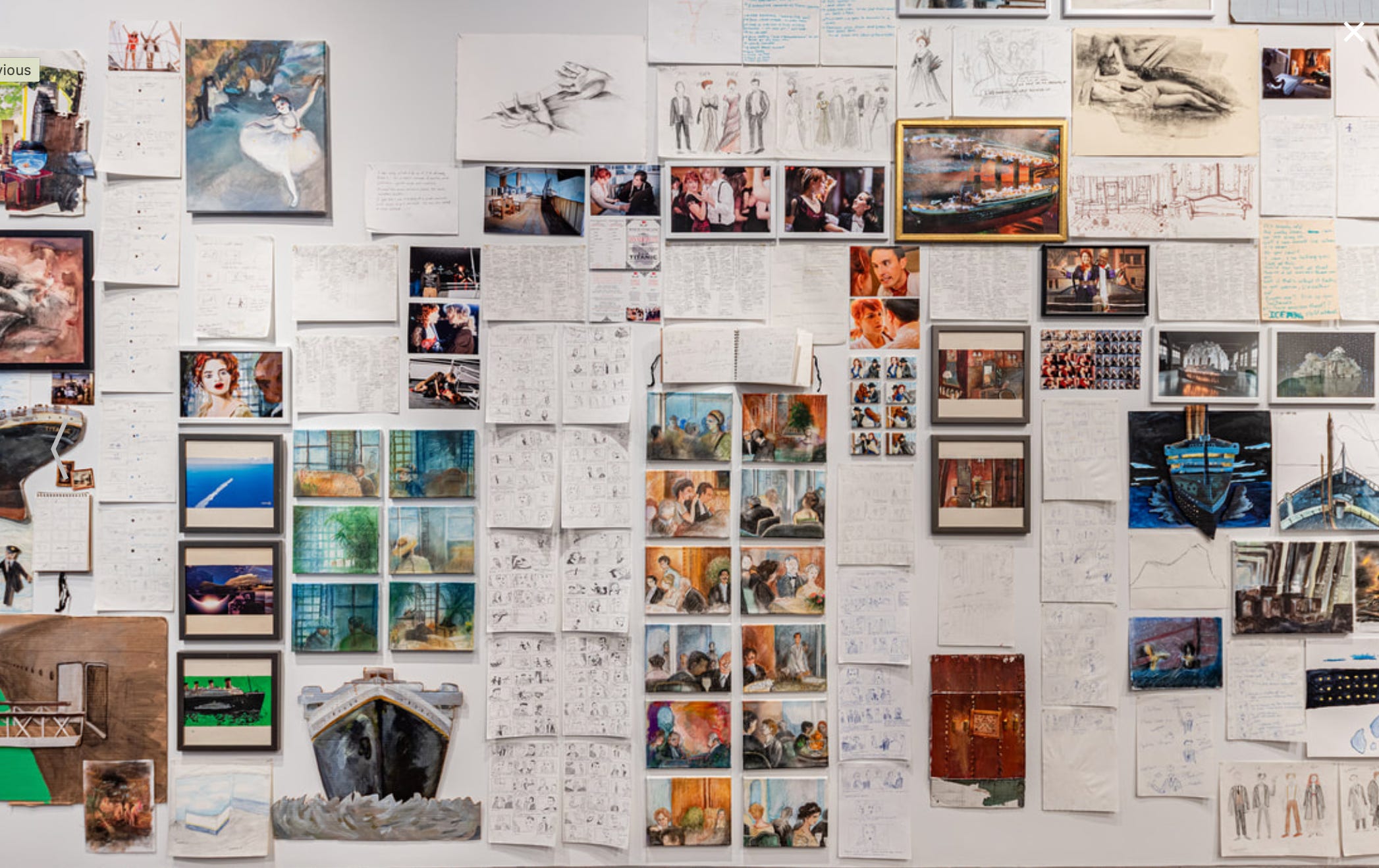
It would be easy to read this as irreverence, or as a strategy of deflation. But the laughter does not dismantle the work; it circulates through it, producing a different kind of attention, less monumental, more porous. Sara Ahmed1 reminds us that emotions are not simply felt but directed, that they adhere to objects and arrive trailing expectations already in place. Some stories come to us saturated; we know how to receive them, how to position ourselves in relation to them. To encounter the Titanic is to inherit a script: mourning, awe, a kind of disciplined sadness. What happens then when laughter appears where grief has been assigned?
The question is not whether the tragedy is diminished. If anything, something else becomes visible: how firmly its meaning has been fixed, how little room it has to move. Bitrán does not erase the event; she alters its conditions of reception. Joy, here, is not escape. It changes how the story is received.
It was a cold March afternoon in New York, and we moved from one gallery to the next without pause. The rooms we had passed through held a certain seriousness, works that seemed already resolved, already carrying their weight. It followed us back out into the cold. Until it didn’t.
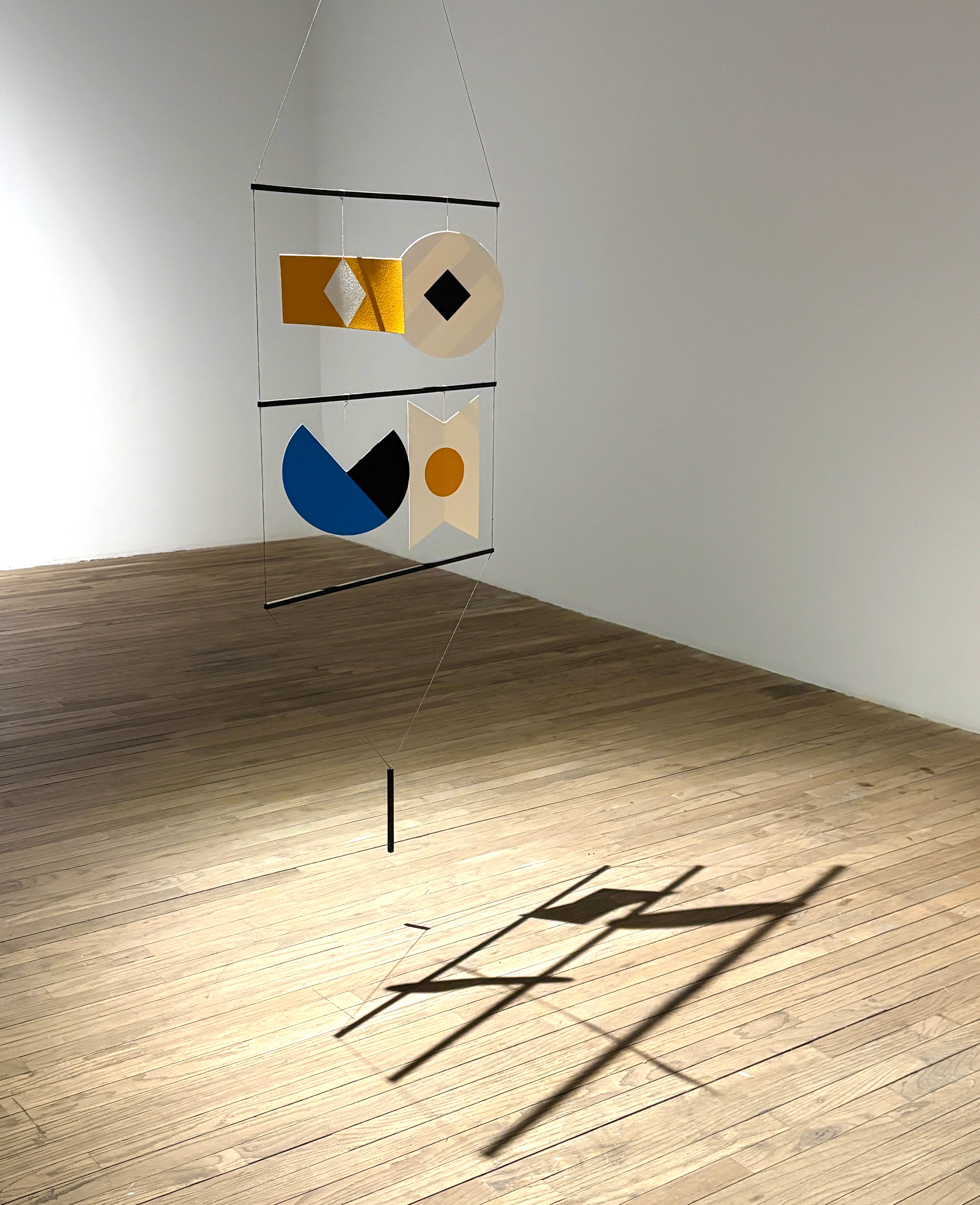
Not far from Bitrán’s show, we next visited Bruno Munari: Useless Machines, at Kaufmann Repetto. Across time, the work unfolds with a quieter insistence. Suspended elements, plywood, wire mesh, aluminum, printed cardboard, hover and rotate, responding to currents too slight to see. Nothing accumulates. Nothing resolves. The works do not perform; they keep going. It is difficult to say what they do, exactly, if doing is understood as producing an outcome. They occupy space without stabilizing it.
In his notes on lightness, Italo Calvino describes a subtraction: not the removal of meaning, but of weight. A refusal to let things harden into inevitability. He turns to figures who survive not by confronting force directly, but by shifting their relation to it, by changing the angle of encounter. Lightness, in this sense, is not fragility. It is a form of precision.
As Bruno Munari himself wrote, it was a matter of freeing abstract forms from the stillness of the canvas and suspending them in the air, allowing them to inhabit space with us, responsive to the real atmosphere around them.²
Munari’s machines do not oppose the logic of utility; they suspend it. In the 1930s, when the machine was the emblem of progress, speed, and production, he proposed something else: a structure that moves without purpose, that responds without striving. The gesture is subtle but exact. If a machine can be useless, then usefulness is no longer a given, but one possibility among others. They do not ask for our attention, nor do they compete for it. In contrast to the technologies that now surround us (designed to capture, and retain our attention) Munari’s machines remain indifferent to our presence. They do not hold us; they allow us to be present without being held.
What holds between these two bodies of work is not similarity of form, but a shared refusal of inevitability. Weight—whether emotional, historical, or industrial—presents itself as necessary. It tells us: this is how things must be held, this is how they must be felt. Both Bitrán and Munari loosen that claim, not by denying weight, but by redistributing it.
There is also, in Bitrán’s work, a refusal at the level of the image itself, its visible construction, its resistance to cinematic polish, that recalls what Hito Steyerl has described as the “poor image,” loosened from the demands of resolution or authority.3
If emotions can attach themselves to things, they can also shift. Not disappear, but move, change direction, settle differently. In Bitrán’s work, laughter doesn’t cancel the tragedy; it interrupts how we’re used to receiving it. It opens space for another response to exist alongside it, a small shift that changes the atmosphere of the room.
Munari’s lightness works differently, but toward a similar release. It isn’t overtly joyful, but it softens the need for things to resolve. The eye follows, adjusts, waits. Nothing insists. The work doesn’t carry you; it asks you to stay with it, in a kind of attention that is neither urgent nor fixed.
It begins to feel, then, that lightness is not the opposite of seriousness, and joy is itself a form of thought. Both are methods, ways of working against the pressure to fix meaning too quickly, too completely.
The ship sinks again, but differently.
The elements shift, but never settle.
And somewhere between suspension and laughter, something opens, not a conclusion, but a condition in which things can still move.
1Ahmed, Sara. “The Contingency of Pain.” In The Cultural Politics of Emotion, NED-New edition, 2. Edinburgh University Press, 2014. http://www.jstor.org/stable/10.3366/j.ctt1g09x4q.6.
2Pierpaolo Antonello, “Beyond Futurism: Bruno Munari’s Useless Machines,” in Futurism and the Technological Imagination, ed. Günter Berghaus (Amsterdam: Rodopi, 2009), 14.
3Hito Steyerl, “In Defense of the Poor Image,” e-flux journal, no. 10 (November 2009), https://www.e-flux.com/journal/10/61362/in-defense-of-the-poor-image/
Just to let you know, although the video of Munari's work had the arrow where I expected it to play and it brought me to another page, that page no longer had the video but a blank spot, so I could not see it.