

Art Week, for those of us who live here, starts earlier, before Thanksgiving and sometimes at the grocery store while you’re searching for thyme. Hosting and cooking bleed into openings and previews; errands blur with conversations about what might be worth crossing the causeway for this year, and how much of the chaos we’re willing to let in. From the inside, it feels less like a spectacle and more like choreography: a domestic prelude that rearranges your days long before you step into a tent. Maybe that’s why this year I found myself less focused on taking inventory altogether.
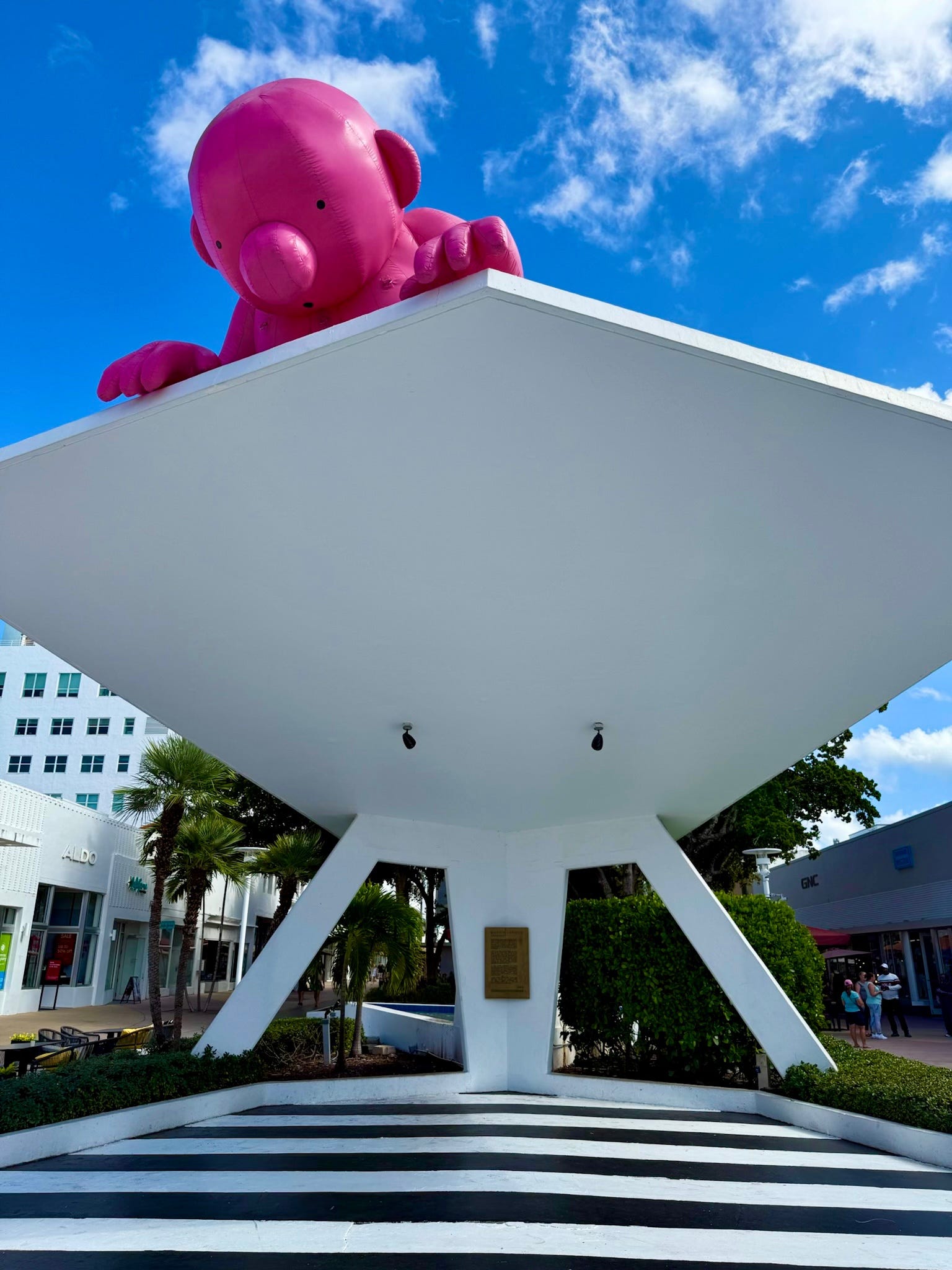
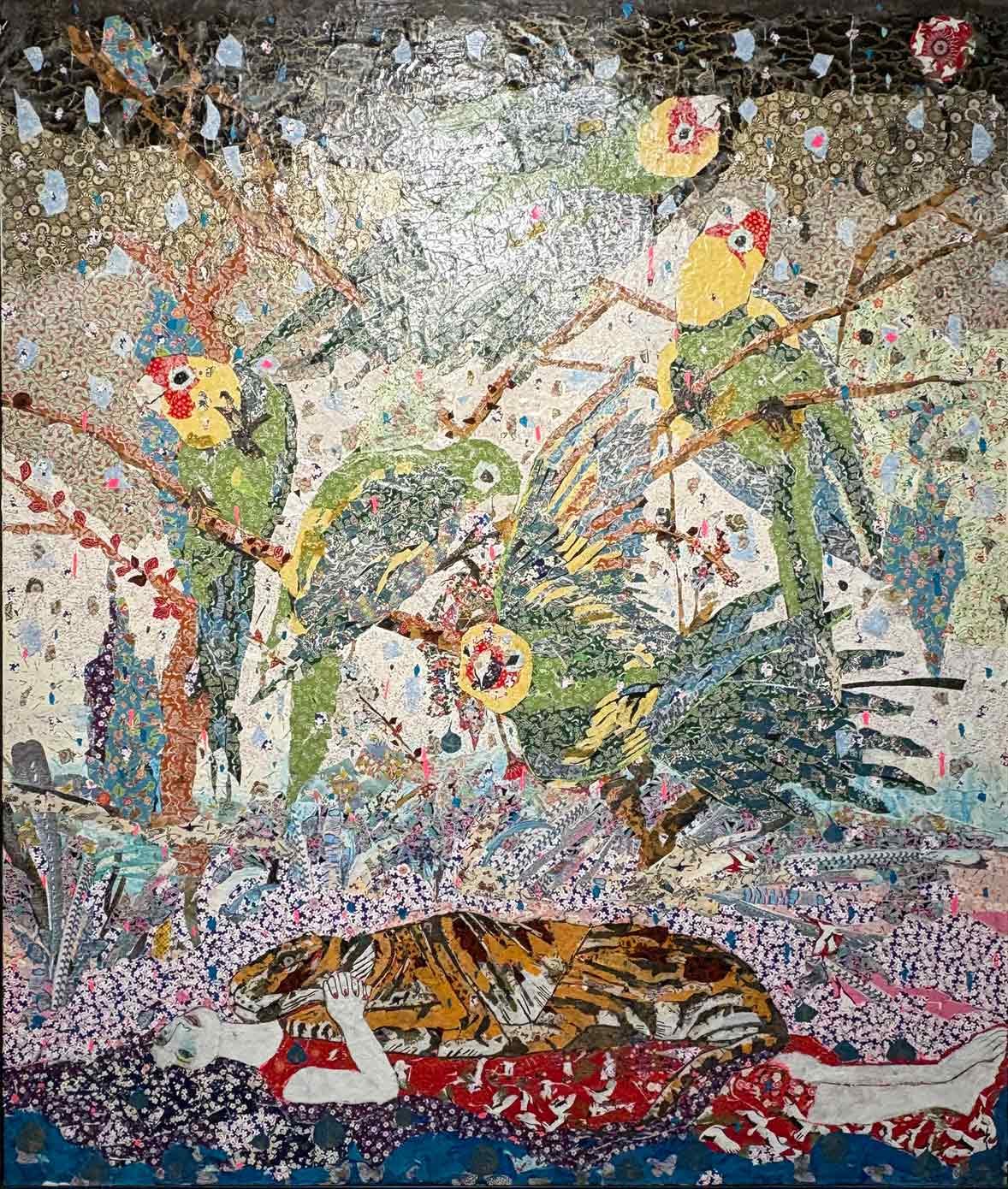
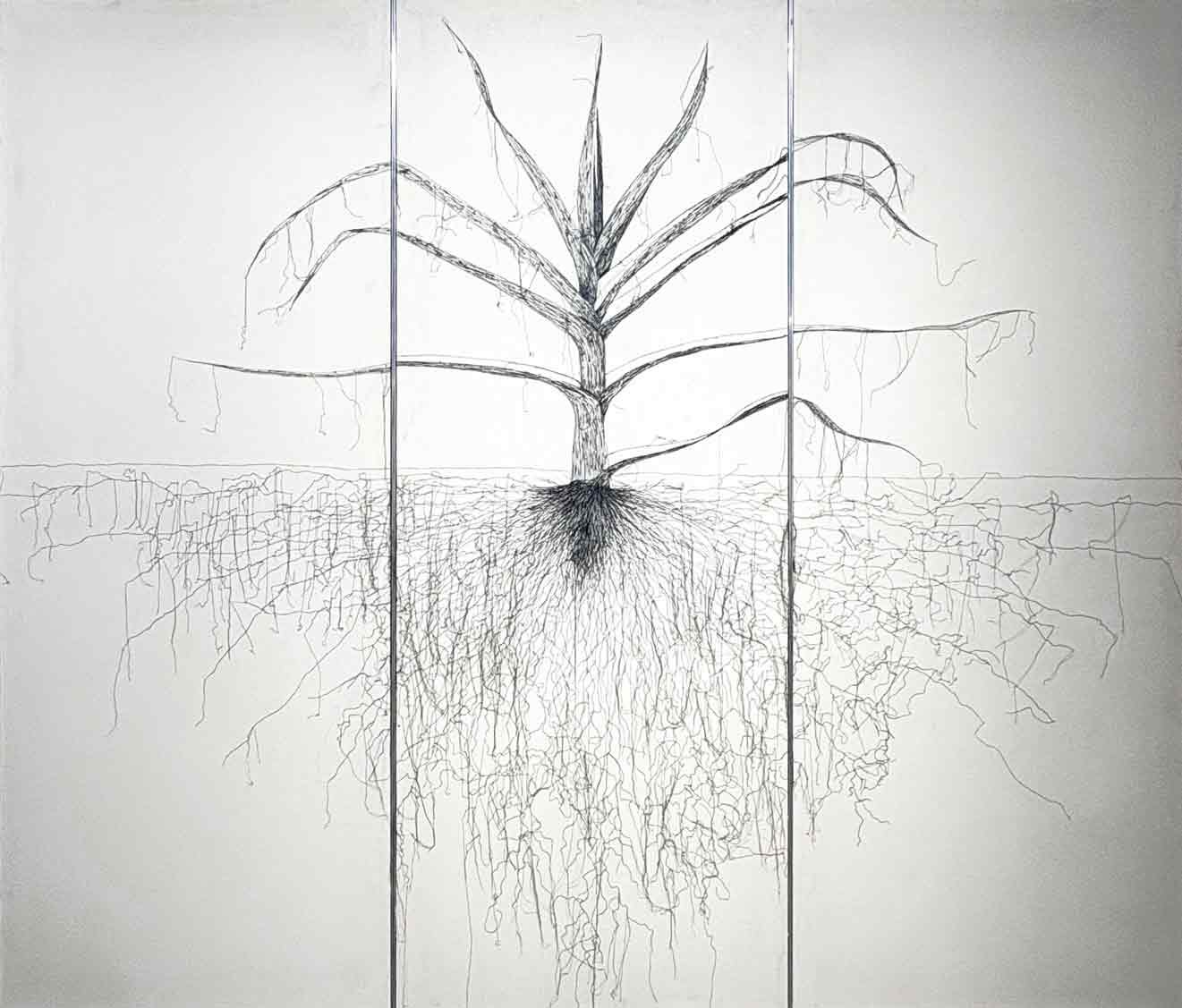
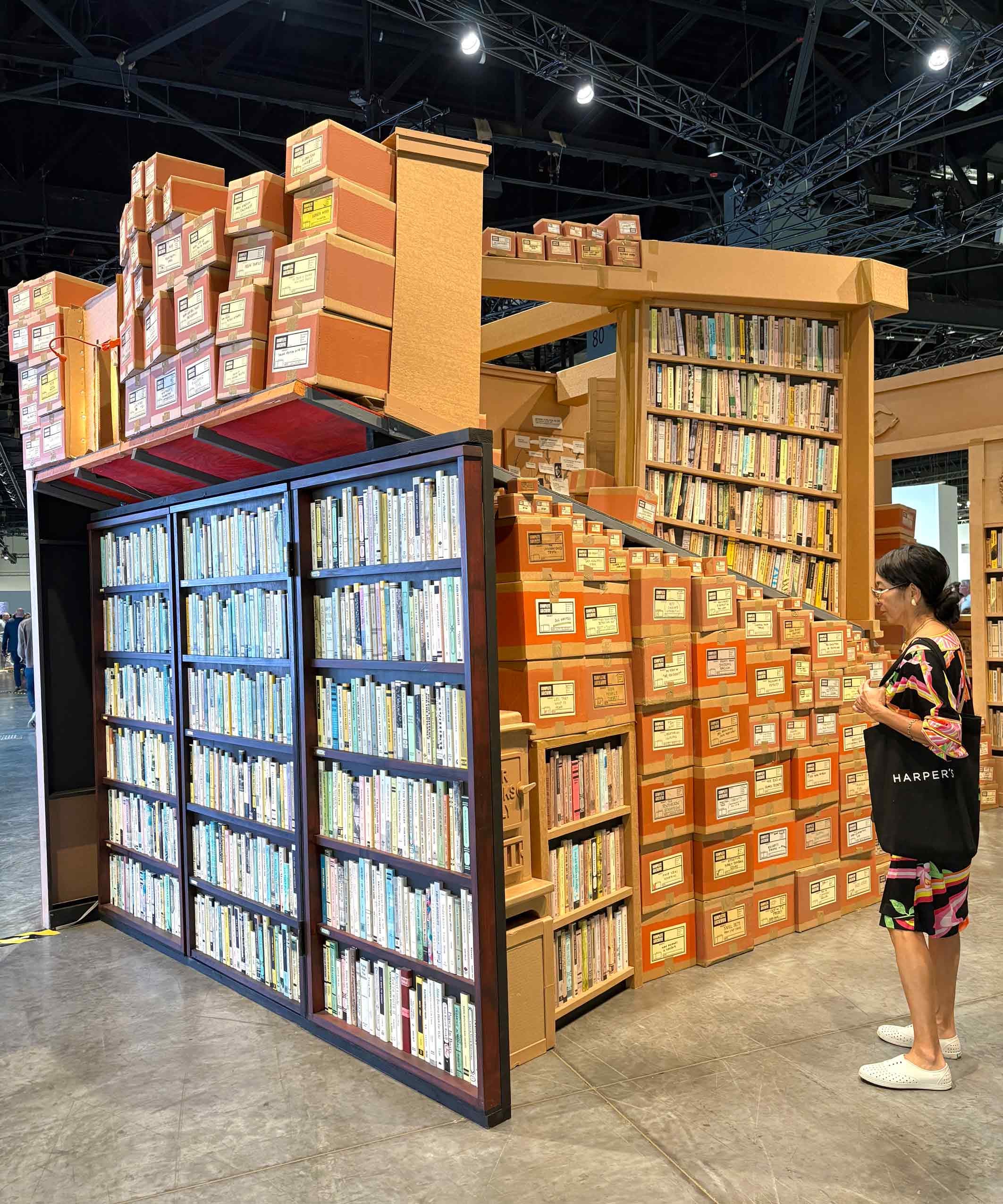
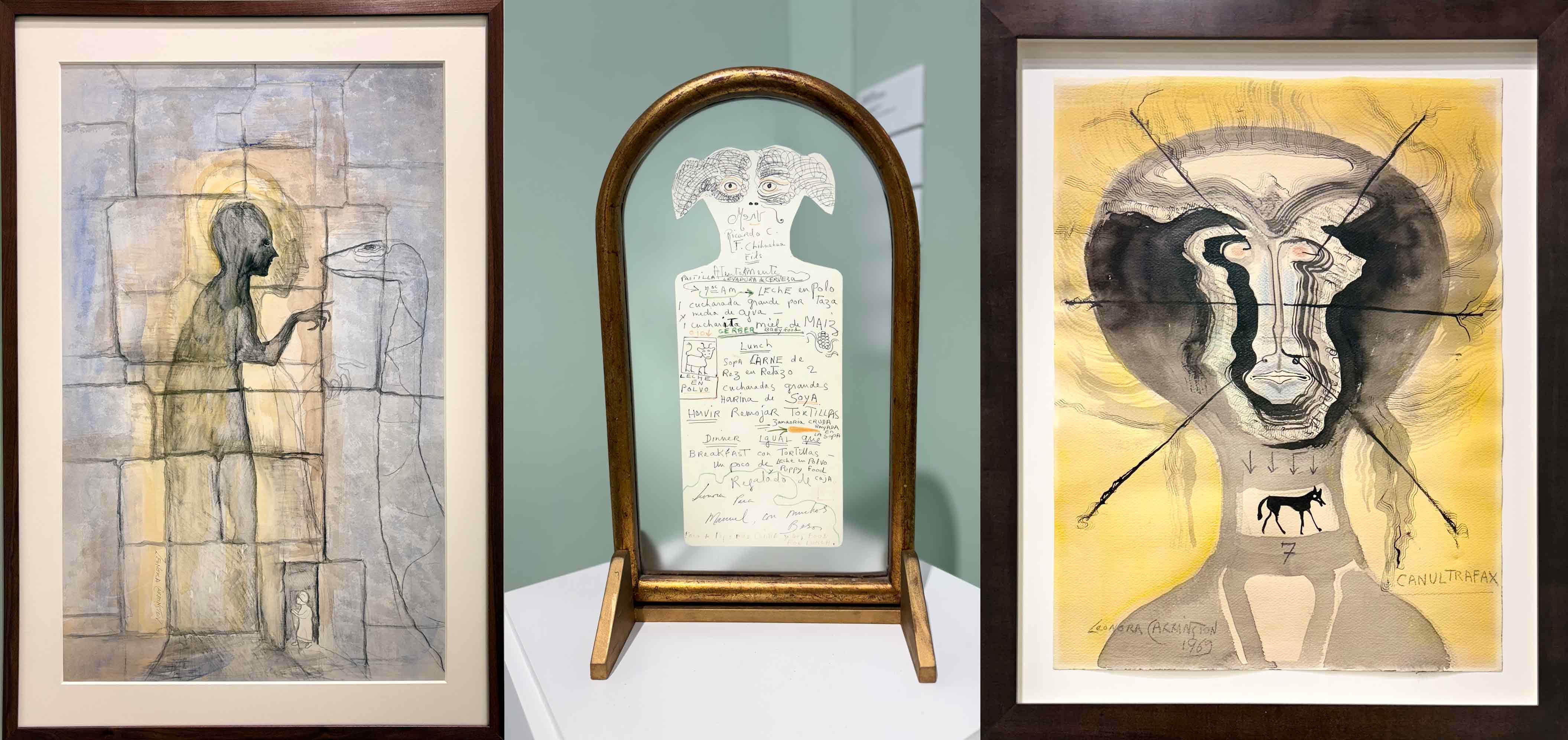
If I trace what stayed with me—not in the itinerary but in the mind—it wasn’t a single fair or booth. It was a mood, a sharpening of attention. Very small paintings were everywhere, almost apologetic in scale. Ceramics edged out textiles. Figurative work eclipsed abstraction. Books and bookshelves sprouted like small ecosystems—as if what people craved most was continuity and understanding, not accumulation. And scattered across the city, Philippe Katerine’s buoyant pink Monsieur Rose figures broke the week’s self-seriousness. Beyond the tents, the institutions felt in command of their moment: MOCA opened Field of Dreams, a show by local artist Diana Eusebio. At Art Nexus, Mulheres: Proposals from Brazil offered a concise but resonant glimpse of how Brazilian women have shaped the country’s artistic language across generations. Locust Projects, Primary Projects, Supermarket Gallery, and Tunnel, among others, held strong shows by Miami-based artists. Taken together, these moments underscored Miami’s growing sense of artistic self-definition—a city with a mature cultural spine.
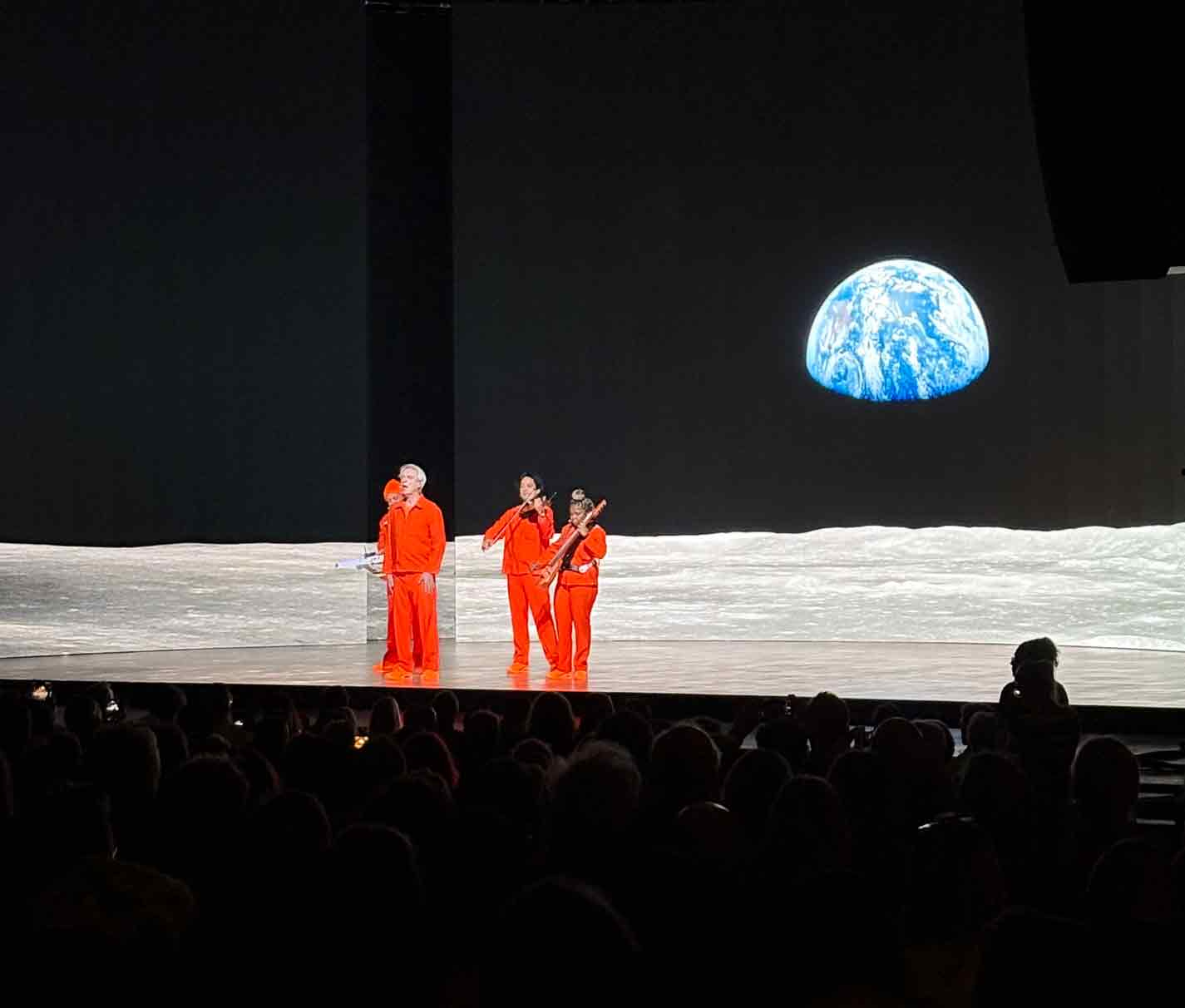
Of course, the frictions were everywhere. Traffic felt mythological, the city seemed reduced to a network of traps. We never made it to Es Devlin’s Library of Us; even the sidewalks around there looked impossible from our car window. At times, it made me wonder whether certain events become too popular for their own good, and why we insist on staging art on the beach. David Byrne’s concert on Friday night felt like a reset. My favorite moment happened in the concert line. A man in an official jacket sprinted past shouting what sounded like a warning, but his thick Miami accent left the mostly Basel-week crowd perplexed. Then someone in our group cracked the code: “Porsche Cayenne!” Suddenly it all made sense—a luxury car blocking the way, an owner nowhere in sight, and a line of people powerless to help. It felt like a perfect Art Week parable: urgency without clarity, delivered at full volume. And still we waited, laughing, inching along, willing to be moved by music, by art, by each other.
By the end of the week, what stayed was the subtle recalibration that happens when the city absorbs so much attention at once. And the books—their surprising recurrence. There’s a growing confidence in the creative community here, a sense that artists are navigating the week on their own terms and that Miami’s cultural ground feels stronger underfoot. Art Week always asks something of those who live here—patience, flexibility, the capacity to hold beauty and absurdity in the same breath. And maybe that’s why the stories linger more than the artworks: because they reveal how we move through all of it together, stitching meaning from whatever the week places in our path.
Here’s to more Porsche Cayenne moments!
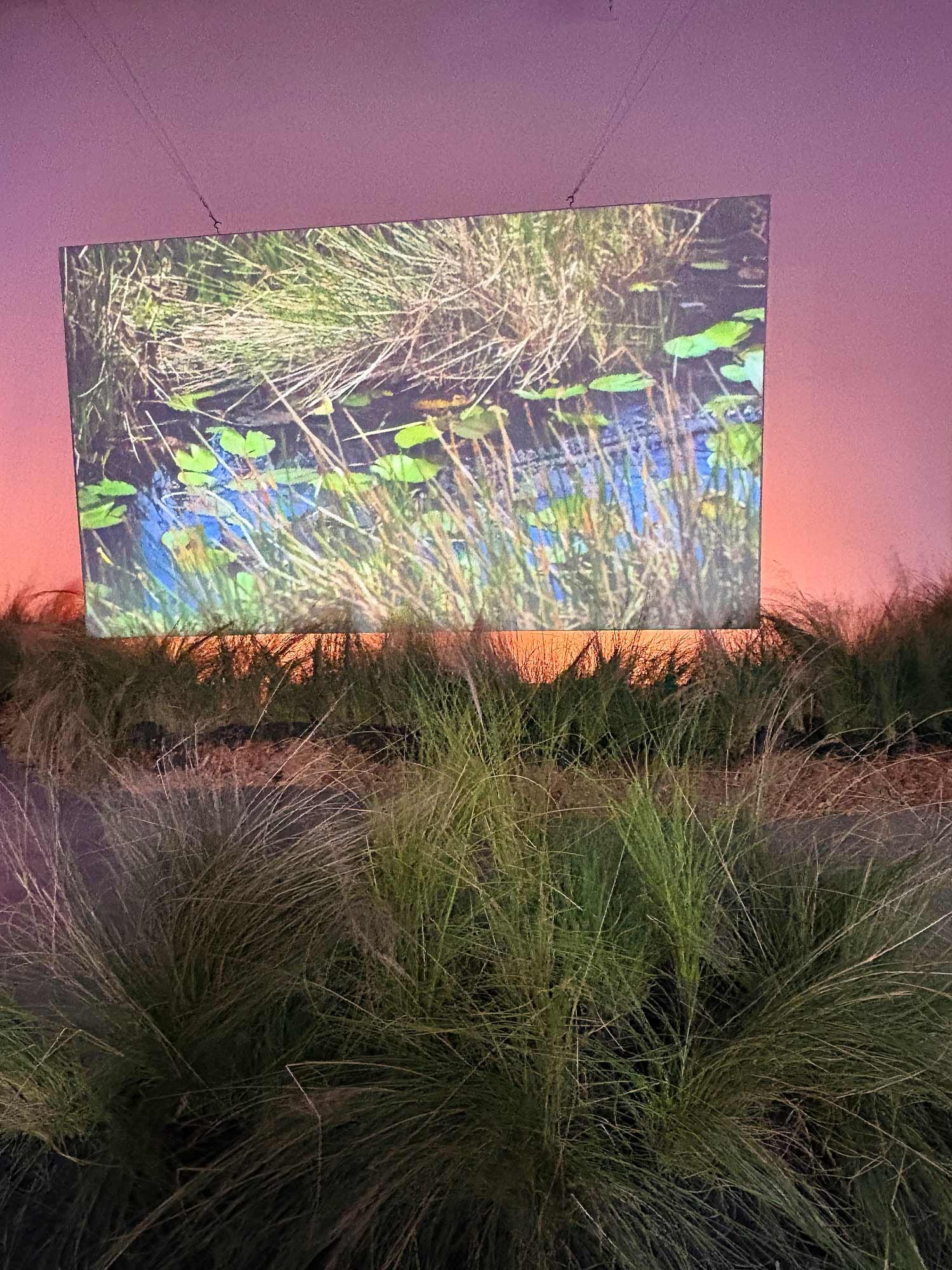
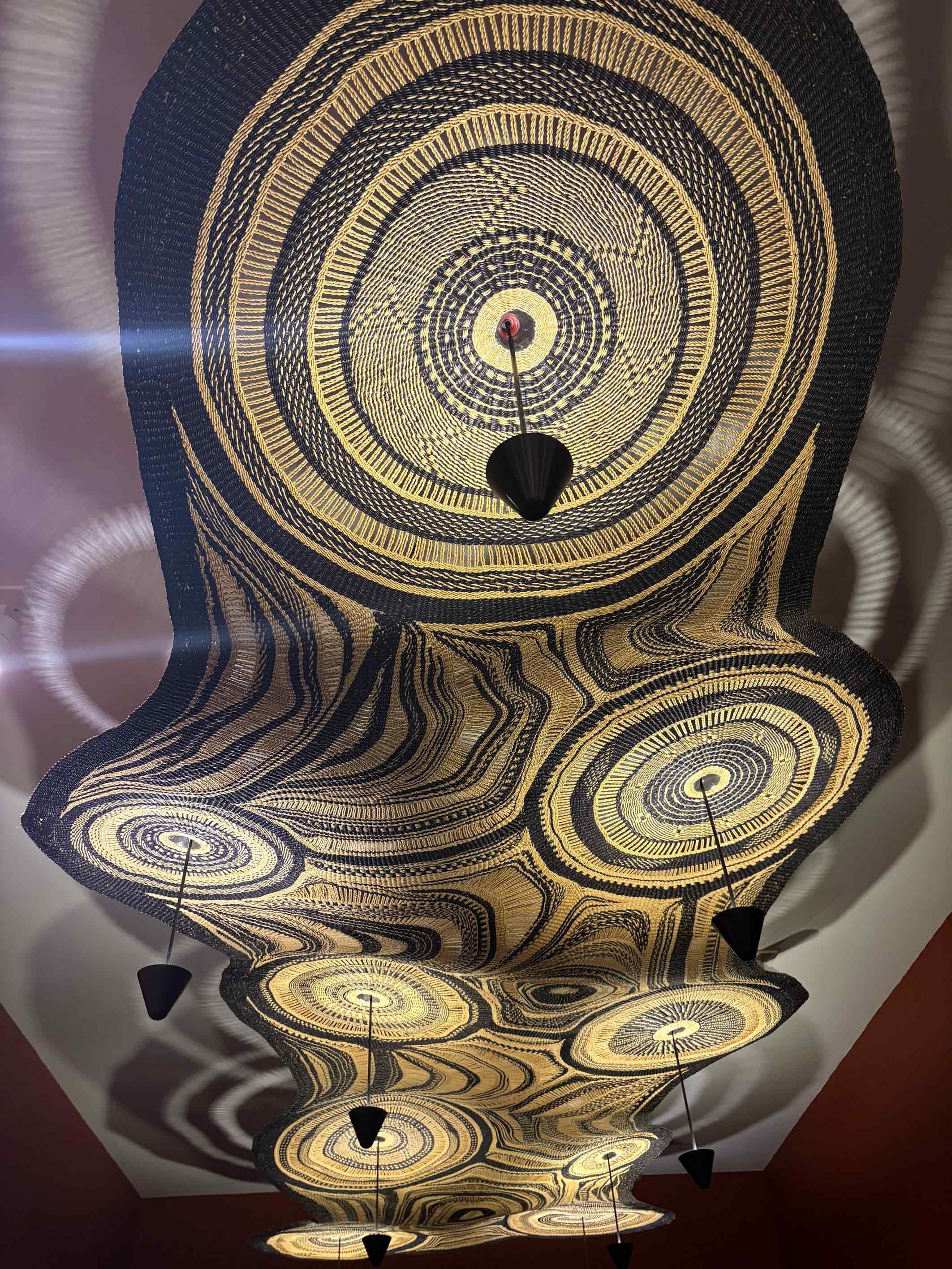
At Espacio 23 artist Tania Candiani created a performance around her installation Substrata, shown there as part of the current exhibition A World Far Away, Nearby and Invisible. The performance featured original music by Mexican composer Concepción Huerta and the Miami Sound Space chorus.